


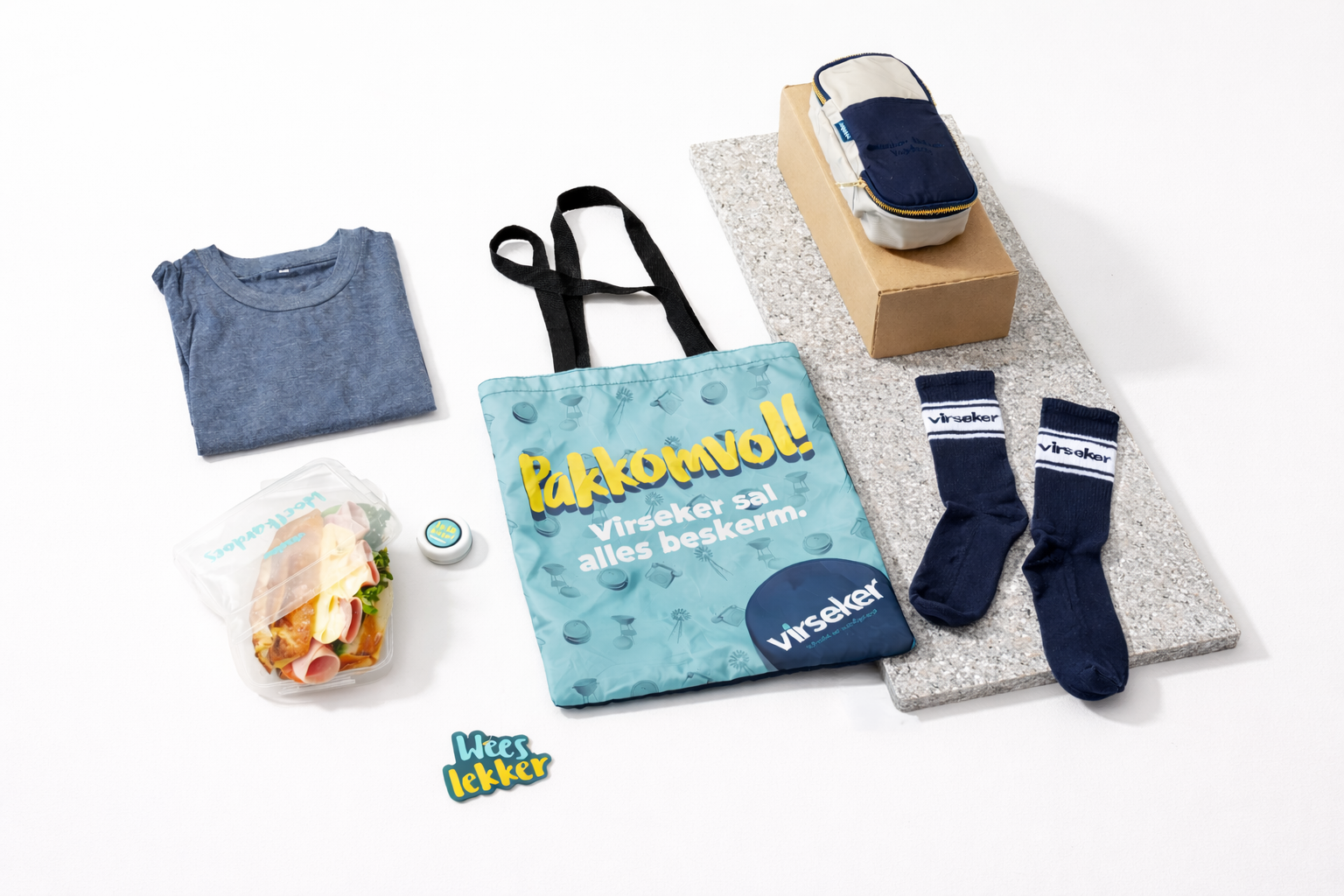
Why inexpensive corporate merchandise often costs brands far more than they expect.
At first glance, cheap corporate merchandise seems like a practical decision.
Lower unit costs mean more products can be distributed, which feels like greater reach and better value for money. Many companies assume that the more items they hand out, the stronger the brand exposure will be. However, in reality, inexpensive merchandise generally creates the opposite effect.
When products feel generic, poorly made, or disconnected from the brand itself, they rarely stay in people’s lives for long. Instead of reinforcing the brand, they disappear. And in many cases, that short lifespan makes cheap merchandise far more expensive than brands realise.
Cheap Merch Rarely Lasts
The first hidden cost is longevity.
Products made with lower-quality materials or minimal design consideration have very short lifespans. A thin tote bag, a poorly printed notebook, or a cheaply produced t-shirt may only be used once or twice before it’s forgotten or discarded.
This dramatically reduces the value of the investment. If merchandise disappears after a few days, the brand exposure disappears with it. By contrast, well-designed merchandise tends to stay in use for months or even years. That extended presence allows the brand to remain visible long after the item was originally given.
Cheap Products Send the Wrong Message
Merchandise communicates far more than most brands realise.
Every item communicates subtle cues about how the company sees itself. The design, the branding, and the overall presentation all contribute to how the brand is perceived. When merchandise feels inexpensive or poorly considered, it can unintentionally suggest that the brand itself lacks attention to detail.
This is particularly important for companies that position themselves as innovative, premium, or design-conscious. If the merchandise contradicts that image, it creates a disconnect between what the brand says and what people experience.
Cheap Merchandise Is Easily Forgotten
One of the biggest challenges with traditional promotional products is memorability.
Generic items rarely stand out. They tend to blend into the background alongside countless other branded items people receive throughout the year. Without strong design, usefulness, or intentional presentation, these items fail to create any lasting impression. The result is merchandise that technically reaches people but fails to create any meaningful connection with the brand.
Cheap Merch Can Waste Marketing Budget
Many organisations measure the success of merchandise by how many items they distribute. But distribution alone doesn’t create value.
If thousands of items are handed out but only a small number remain in use, most of the marketing investment effectively disappears. The brand gains very little long-term visibility despite the initial cost.
Fewer, better-designed pieces of custom branded merchandise often deliver far greater impact. When products are well made and genuinely useful, they remain part of people’s daily lives and continue representing the brand over time.
Cheap Merch Misses the Opportunity
Corporate merchandise has the potential to do much more than display a logo.
When approached thoughtfully, it can reinforce brand identity, strengthen company culture, and create memorable experiences for employees and clients. Cheap merchandise rarely achieves these outcomes because it isn’t designed with that intention. It simply exists as a product rather than as part of a broader brand experience.
That is the real hidden cost: the missed opportunity to create something meaningful and memorable.
Rethinking Corporate Merchandise
Many companies in South Africa are beginning to rethink how they approach branded merchandise.
Instead of focusing on the lowest possible cost per item, brands are increasingly prioritising thoughtful design, better branding, and products that people genuinely want to use. This shift reflects a broader understanding that merchandise represents the brand just as much as any advertisement or marketing campaign.
And when merchandise reflects the brand properly, it becomes far more valuable than the cheapest option on the catalogue page.
Want to create merchandise people actually want to keep?
→ Let’s create something unordinary.
Share:
Employee Welcome Kits: Why First Impressions Matter
The Difference Between Promotional Products and Brand Merchandise